
How Do I Know If I’m Actually Called to Be a Prophet?
Jul 12, 2026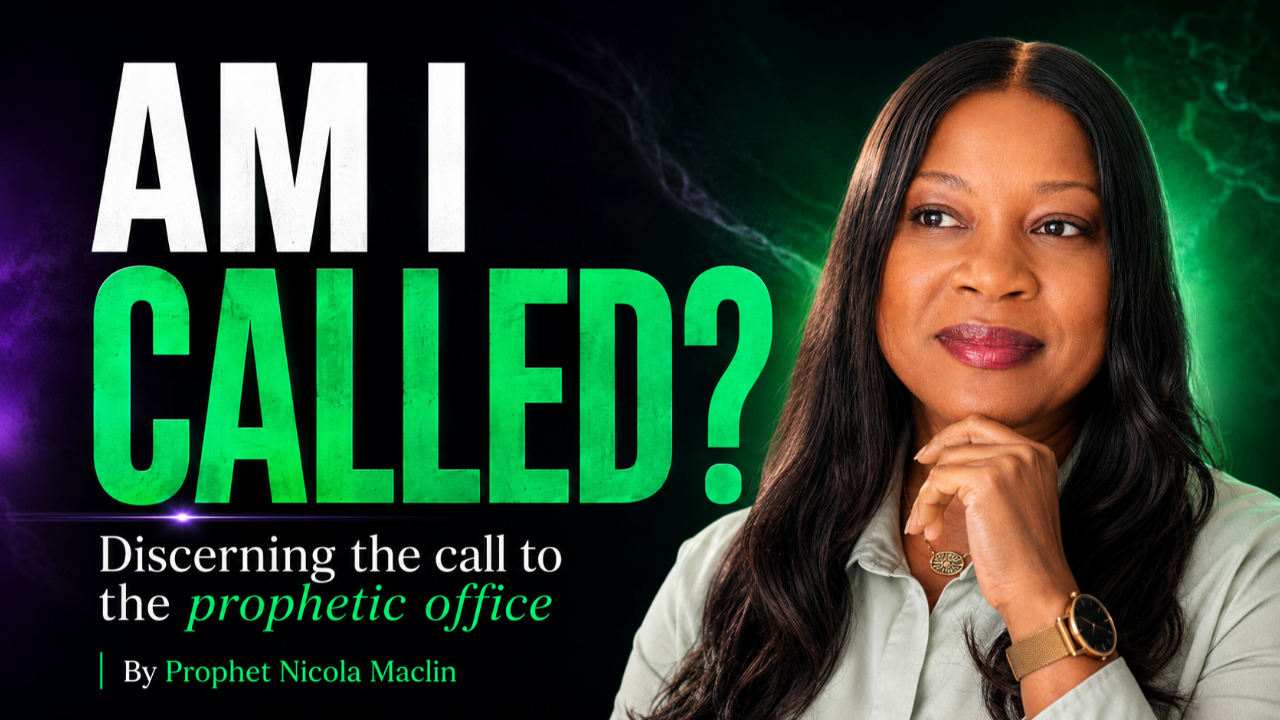
By Prophet Nicola Maclin
Many people begin asking this question after a series of unusual spiritual experiences.
They may have vivid dreams that later come to pass. They may sense what someone is going through before the person says anything. They may feel a strong burden to pray, perceive spiritual conditions in a room, or receive impressions that seem to come directly from God.
Eventually, the question rises:
Am I actually called to be a prophet?
It is an important question, but it cannot be answered by spiritual experiences alone.
Having dreams does not automatically make you a prophet. Hearing God does not automatically mean you have been called to the office of a prophet. Giving an accurate prophetic word does not immediately establish your identity, function, or authority.
God desires to speak through His people. Paul told the Corinthian church, “For ye may all prophesy one by one, that all may learn, and all may be comforted” (1 Corinthians 14:31 KJV). Yet in the same letter, Paul asked, “Are all prophets?” (1 Corinthians 12:29 KJV).
The expected answer is no.
All believers may be used prophetically, but not every believer who prophesies is called to function as a prophet.
Understanding that difference can protect you from rushing into a title before you have understood the calling.
Prophetic Ability Is Not the Same as the Office of a Prophet
Prophetic ministry has several expressions.
A believer may receive a prophetic impression for another person. Someone may operate regularly in the gift of prophecy. Another person may carry a consistent prophetic grace that affects how they pray, perceive, communicate, and serve.
Then there are those whom Christ calls and gives to the Church as prophets.
Ephesians 4:11 says, “And he gave some, apostles; and some, prophets; and some, evangelists; and some, pastors and teachers.”
The prophet described in this passage is not simply someone who occasionally receives a word. The prophet is part of Christ’s governmental and equipping structure within the Church. Prophets help prepare, mature, strengthen, correct, warn, and equip the people of God.
The gift of prophecy is something the Holy Spirit may operate through a believer.
The office of the prophet involves a person becoming a gift from Christ to His Body.
That calling carries responsibility.
A prophet is not known only by what they see. A prophet is also formed by what God requires them to carry.
Your Experiences May Be an Invitation, Not Yet an Identification
One of the earliest mistakes emerging prophets make is using an experience to define themselves too quickly.
You dreamed something, and it happened.
You discerned a hidden issue correctly.
You felt someone’s pain without being told.
You knew when something was wrong.
You gave a word that brought confirmation.
Those experiences should not be ignored. They may reveal that prophetic grace is present in your life. But they should lead you into prayer, study, training, and discernment, not immediately into public identification.
Samuel heard the voice of God before he understood who was speaking.
First Samuel 3:7 says, “Now Samuel did not yet know the LORD, neither was the word of the LORD yet revealed unto him.”
Samuel was hearing accurately, but he did not yet understand the nature of the encounter. Eli had to help him recognize and respond to the voice of God.
This is often the condition of an emerging prophet. Something is happening, but the person does not yet have the language, maturity, or framework to understand it.
You may be receiving real revelation while still needing help identifying what the revelation means, what should be done with it, and whether it is connected to a lifelong prophetic assignment.
Do not despise the beginning.
But do not allow the beginning to convince you that you have already reached maturity.
A Prophetic Calling Usually Reveals a Pattern
A calling is not normally established by one dream, one prophecy, one conference, or one emotional moment.
Over time, a pattern begins to emerge.
You repeatedly receive revelation concerning people, churches, leaders, communities, regions, or future events. Certain burdens continue to return. Your prayer life begins to carry a strong revelatory dimension. You notice spiritual conditions that others may not immediately perceive.
You may also recognize that God has been training you through your life experiences long before you understood what He was doing.
Many prophets can look back and see that discernment was operating early. They sensed danger, conflict, grief, deception, transition, or spiritual movement before they had words for it.
Some were called overly sensitive.
Some were accused of overthinking.
Some struggled because they could sense what was happening but did not know how to process what they perceived.
Sensitivity alone does not prove that someone is a prophet. Trauma, anxiety, fear, personality, and learned behavior can also affect how a person reads environments.
However, when spiritual sensitivity is surrendered to God, tested through Scripture, developed through prayer, and confirmed through consistent fruit, it may become part of the evidence that a prophetic calling is present.
The question to ask is not just, “Have I experienced something prophetic?”
Instead ask, “Has God established a consistent prophetic pattern in my life?”
A Prophet Carries More Than Revelation
Many people are attracted to prophecy because of the revelation.
They want to see.
They want to know.
They want to announce what God is saying.
But the life of a prophet is not built around receiving information. It is built around carrying responsibility before God.
Jeremiah did not simply receive words. He carried the burden of speaking to a resistant people. Ezekiel was appointed as a watchman and held accountable for warning those God sent him to address. Samuel was trusted to communicate the word of the Lord accurately, even when the message was difficult.
Prophetic calling often includes a burden for the spiritual condition of others.
You may feel deeply affected when people remain immature, deceived, unprepared, wounded, or misaligned. You may carry an unusual concern for the condition of the Church, the integrity of leaders, the spiritual direction of a community, or the preparation of God’s people.
That burden is not the same as irritation.
It is not simply noticing what everyone else is doing wrong.
A genuine prophetic burden draws you toward prayer, responsibility, service, and obedience. It does not merely produce criticism.
The emerging prophet must learn the difference between being bothered by something and being assigned to it.
The Calling Will Require Formation
A genuine call does not exempt you from development.
It creates the need for it.
Prophets must learn how to interpret revelation. They must understand timing, audience, tone, protocol, and application. They must learn when to speak, when to pray, when to ask questions, and when to remain silent.
They must also confront what is happening within their own soul.
Unhealed rejection can distort how a prophet communicates correction. Fear can cause a prophet to withhold what God has said. Pride can cause a prophet to exaggerate revelation. Insecurity can create a dependence on titles, attention, and public affirmation.
A person can receive accurate revelation and still deliver it through an unhealthy emotional filter.
Prophetic formation teaches you how to separate revelation from reaction.
It teaches you to distinguish what God said from what you assumed.
It teaches you to recognize when personal offense has become mixed with spiritual perception.
It also teaches you that being correct does not automatically mean you handled the revelation correctly.
God does not form prophets merely so they can give impressive words. He forms prophets who can be trusted with His heart, His people, and His instructions.
A Prophet Must Be Willing to Be Corrected
One of the clearest warning signs in prophetic development is an unwillingness to be examined.
First Corinthians 14:29 says, “Let the prophets speak two or three, and let the other judge.”
Biblical prophecy is not placed beyond evaluation.
Prophetic people must be willing to test what they receive. They must accept that they can hear correctly, interpret incorrectly, speak prematurely, or apply a revelation to the wrong situation.
Correction is not proof that you are not called.
Sometimes correction is evidence that God is developing the person He has called.
Samuel had Eli.
Elisha served Elijah.
Prophets in the New Testament functioned within spiritual communities where their words could be weighed and their lives could be observed.
Isolation can make an emerging prophet feel powerful while remaining untested.
Calling should not produce independence from the Body of Christ. A healthy prophetic calling should deepen your respect for Scripture, spiritual order, wise leadership, accountability, and community.
Other People May Recognize the Grace Before You Understand It
Calling originates with God, but it is often confirmed through people.
Others may begin noticing that your words carry unusual clarity, weight, or accuracy. Mature leaders may recognize a prophetic pattern in your life. People may consistently seek you for prayer, discernment, or insight.
However, popularity is not confirmation.
People can be drawn to charisma, confidence, mystery, or strong communication. Online attention does not establish a prophetic office. Neither does being invited to preach, receiving compliments, or having people call you “Prophet.”
Real confirmation involves more than a title.
Those confirming you should be able to recognize the grace, character, burden, fruit, and function operating in your life. They should also be willing to help you grow rather than merely celebrate your potential.
You need people who can affirm what is genuine and confront what remains immature.
The Calling Produces Fruit, Not Just Fascination
When prophetic grace is functioning in a healthy way, people should not only become impressed by the prophet.
They should become more aware of God.
Prophetic ministry should bring edification, exhortation, and comfort. It may also bring warning, correction, conviction, direction, or exposure. Yet even difficult prophetic ministry should serve the purposes of God rather than the ego of the messenger.
Ask yourself what your prophetic ministry is producing.
Are people becoming more dependent on your words, or are they growing in their relationship with God?
Are your words producing clarity, or do they regularly leave people afraid and confused?
Do you feel responsible for accurately serving people, or mainly excited about being seen as someone who knows hidden things?
Are you growing in humility as the revelation increases?
Fruit does not mean everyone will agree with you. Biblical prophets were often misunderstood and rejected. But rejection alone does not prove that you are prophetic either.
Sometimes people resist a true word.
Sometimes they are responding to poor delivery, bad timing, immaturity, or a lack of wisdom.
A developing prophet must be honest enough to consider both possibilities.
You May Be Called Even While You Are Still Unsure
Some people believe that true prophets are always completely certain about their calling.
That is not always the case.
Jeremiah responded to God by pointing to his youth and inability to speak. Moses repeatedly questioned his capacity to fulfill what God had assigned to him. Gideon asked for reassurance because he struggled to reconcile God’s call with how he saw himself.
Uncertainty does not automatically disqualify you.
In fact, some people who are deeply called hesitate because they understand the seriousness of speaking for God. They do not want to misrepresent Him. They feel the weight of the responsibility.
That caution can be healthy when it drives you toward training rather than permanent avoidance.
You do not have to force yourself to claim a title before you have clarity.
Begin by faithfully stewarding what God is already giving you.
Record your dreams.
Journal prophetic impressions.
Study Scripture.
Submit what you receive for evaluation.
Notice recurring themes.
Pay attention to the people, problems, and spiritual burdens that consistently draw your attention.
Practice obedience in private before seeking recognition in public.
Clarity often develops while you are faithfully walking with God.
Questions to Help You Discern the Calling
As you pray, consider these questions honestly:
Do I experience a consistent pattern of receiving revelation, or am I building my identity around a few isolated experiences?
Does my prophetic sensitivity move me toward prayer and service, or mainly toward criticism?
Am I willing to be trained, corrected, and evaluated?
Do mature spiritual leaders recognize prophetic grace and responsibility operating in my life?
Am I growing in character as I grow in revelation?
Do I feel burdened to help mature and prepare God’s people?
Am I willing to obey God when there is no audience, platform, title, or applause?
Do my words help people encounter God, or do they make people dependent on me?
Am I seeking the function of a prophet, or mainly the recognition associated with the title?
These questions are not meant to make you doubt every spiritual experience. They are meant to help you examine the foundation upon which you are building.
Do Not Rush the Title
The prophetic office is not a branding decision.
It is not a title you choose because it seems to explain your spiritual experiences. It is a calling that must be received, formed, tested, confirmed, and faithfully stewarded.
You may be genuinely called and still be in an early stage of development.
You may operate strongly in the gift of prophecy without being called to the office of a prophet.
You may also discover that God has been forming you prophetically for years, even though you did not have language for what you were experiencing.
Give yourself permission to be in process.
You do not have to pretend to be more developed than you are. You do not have to compare your journey to people who have been trained longer. You do not have to announce a title in order to begin obeying God.
Let the fruit speak.
Let the pattern become clear.
Let your character be formed.
Let your revelation be tested.
Let God establish your identity, assignment, function, and sphere in His timing.
The goal is not simply to become confident that you are called.
The goal is to become the kind of prophet God can trust.
Are You Trying to Understand Your Prophetic Calling?
You do not have to discern your development alone.
Join the Ascenders Community, a free spiritual growth community for believers who want to mature, understand their calling, and become more intentional about their development.
Inside the community, you can learn, grow, ask questions, and connect with others who are serious about spiritual formation.
Join the free Ascenders Community:
https://tinyurl.com/AscendersCommunity