
Why Prophetic Sensitivity Can Feel Like Torment
Jul 13, 2026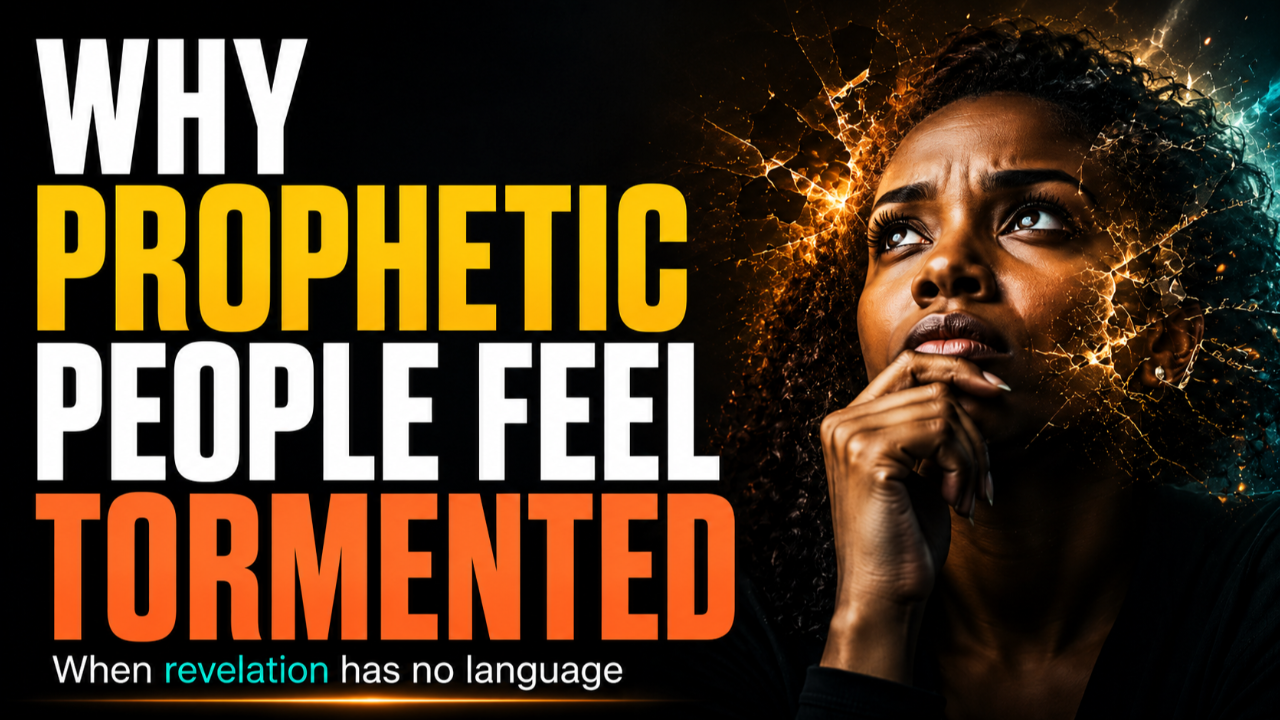
By Nicola A. Maclin
The torment begins when revelation has no language.
You are dreaming, sensing, receiving warnings, or carrying burdens you cannot explain. Something is happening within you, but you do not know where it is coming from or what you are supposed to do with it. What may be a developing prophetic capacity begins to feel like confusion because you have no framework for understanding the experience.
Eventually, you become tired of carrying what you cannot name. You pray for the dreams to stop. You ask God to remove the sensitivity because relief feels more important than understanding.
The problem is not always what you are receiving. The deeper struggle is that no one has taught you how to carry it.
When spiritual experiences remain unexplained, fear begins interpreting them for you. A vivid dream becomes a prediction of disaster. An internal warning grows into panic. You recognize that something has shifted, but anxiety and past wounds add details God never gave.
This is why prophetic people need more than revelation. We need the knowledge and formation required to handle it without becoming overwhelmed.
Proverbs 11:9b says, “but through knowledge shall the just be delivered.”
There are forms of torment that begin to break when truth finally gives you language for what you have been experiencing.
When You Prayed for the Dreams to Stop
Some prophetic people have prayed against their own capacity without realizing what they were doing.
You may have told God that you no longer wanted to dream. Perhaps you asked Him to remove your awareness of people and environments because you were exhausted by what you felt. Those prayers probably did not come from rebellion. They came from distress.
You wanted peace.
Still, those words should not remain unaddressed.
If fear caused you to reject a way God may have been communicating with you, bring that prayer back before Him. Repent for agreeing with fear and for speaking against something He may have been trying to mature.
Repentance brings your heart out of agreement with the belief that spiritual sensitivity is dangerous simply because you do not yet understand it.
You can pray:
Father, I repent for the words I spoke against the way You formed me and the ways You may choose to communicate with me. I come out of agreement with fear, confusion, and shame. I withdraw every prayer asking You to shut down what You desire to mature. Teach me how to recognize Your voice and test what I receive. Heal anything within me that distorts my perception, and help me carry spiritual sensitivity under the government of Your Word and Your Spirit. In Jesus’ name, amen.
God is not calling you back into confusion. He is inviting you to stop rejecting what you do not understand so He can teach you how to steward it.
Knowledge Changes the Experience
Lack of understanding makes spiritual experiences feel more threatening than they are.
You wake from a vivid dream and spend the rest of the day expecting something terrible to happen. A burden settles upon you during prayer, but you assume the heaviness belongs to you personally. You recognize tension in a room, yet you cannot tell whether you are perceiving something spiritually or responding to your own history.
Knowledge brings order to that confusion.
When you understand that a dream must be interpreted rather than feared, it loses some of its power to control you. Learning that a burden may be an invitation to pray keeps you from carrying it as though it belongs to your own emotional life. Becoming familiar with your personal patterns helps you recognize when rejection or exhaustion is affecting your conclusions.
This kind of knowledge does not make you less spiritual. It makes you more responsible with spiritual information.
Without language, you may spend years rebuking something that needs to be understood. A recurring dream is treated as an attack even though it may be revealing an unresolved issue. A simple warning becomes panic because you have not learned how to wait for clarity.
Fear thrives in the absence of understanding.
Knowledge does not mean you will interpret everything immediately. It gives you a sound place to begin. Instead of allowing your first reaction to become the final meaning, you learn how to pause and examine what happened.
That pause is not unbelief. It is part of prophetic maturity.
Your First Interpretation May Be Wrong
Prophetic perception and prophetic accuracy are not the same thing.
You can sense something real and still misunderstand what it means.
Suppose you notice distance in a relationship. The other person’s tone has changed, and communication is less frequent. The shift may be real, but an old rejection wound can quickly interpret it as proof that you are no longer valued.
That conclusion may have nothing to do with what is actually happening. The person could be exhausted, grieving, or dealing with something they have not shared.
Your gift registered a change. Your wound supplied the explanation.
Past betrayal can affect interpretation in the same way. Experience trained you to notice subtle changes, but it may also cause you to expect deception before enough information is available.
This is where many prophetic people become overwhelmed. They are not only processing what they perceive. They are also processing memory, fear, and the emotional meaning attached to similar experiences from the past.
The gift can be real while the interpretation is still developing.
Maturity requires you to slow the process down. Begin with what you actually perceived. A repeated dream, an unusual thought, or a shift in atmosphere is information. It is not yet a complete conclusion.
Even after the meaning becomes clearer, stewardship still has to be considered. God may be asking you to pray quietly. The revelation could be intended for your preparation rather than someone else’s correction.
Receiving information does not automatically give you permission to speak or act.
That distinction protects you from turning impressions into accusations. It also protects the people around you from being subjected to conclusions that have not been properly tested.
I explore this process more in Receiving Prophecy: The Ultimate Guide to Stewarding Your Prophetic Word, where I teach believers how to receive prophetic revelation without rushing past interpretation, timing, and responsible stewardship.
The Gift Is Not the Whole Problem
Some prophetic people assume that their gift is causing the turmoil when the real issue is the condition through which the gift is being processed.
Rejection can affect interpretation. So can spiritual abuse, prolonged stress, and an inaccurate image of God. If correction has always felt like rejection, you may struggle to hear God’s correction without believing He is angry with you. If authority has been controlling, healthy direction may still feel threatening.
This does not mean your spiritual experiences are false. It means revelation moves through a whole person.
Your emotions, physical condition, history, and spiritual capacity are not stored in separate compartments. Exhaustion can influence the way you think. An unresolved wound may cause a neutral situation to feel threatening. Fear can take a small piece of information and build a much larger story around it.
Prophetic formation helps you become familiar with those internal movements.
You begin to recognize when your perception is being affected by an old pattern. That awareness allows you to wait before calling your reaction discernment.
Healing does not weaken your gift.
It gives revelation a healthier place to flow through.
You Need Formation, Not More Intensity
Prophetic capacity does not arrive fully developed.
A gift is received in seed form. It grows through Scripture, practice, correction, and time. You learn how God communicates with you, but you also learn when your own thoughts or emotions have entered the process.
This is where prophetic culture can make a serious mistake.
We can become impressed by manifestation and neglect formation. Someone gives an accurate word, so we assume the rest of their life is mature. A person has unusual dreams, and a title is placed upon them before they have learned how to interpret responsibly.
Accuracy is not the same as maturity.
The Corinthian church was not lacking in spiritual gifts, yet Paul still confronted envy, division, and disorder among them. Their spiritual capacity was genuine, but the people carrying it were still being formed.
The same tension exists today.
You can receive revelation while your emotional life is still developing. You may have a real gift and still need help with boundaries, restraint, or timing. Spiritual ability does not remove the need for character.
God is not only developing what you can receive. He is developing the person who receives it.
That process will not always feel dramatic. Much of prophetic maturity is formed when you choose not to speak too quickly, when you admit that your interpretation was wrong, or when you submit what you received for correction.
The goal is not to appear powerful.
The goal is to become trustworthy.
Your Gift Cannot Become Your Identity
When spiritual experiences have explained a large part of your life, it is easy to build your identity around them.
Revelation makes you feel close to God. Being the one who sees or knows gives you a place within the community. Then a quiet season comes, and you begin to believe something is wrong.
Silence does not mean you have lost your gift.
God may be developing a relationship with you that is not dependent upon constant spiritual intensity. He wants you to know that you still belong to Him when there is no dream to interpret and no word to release.
Your gift is part of your life. It is not the foundation of your worth.
Before anyone called you prophetic, you belonged to God. That identity must remain secure when your experiences change.
A healthy prophetic person can live an ordinary day. You can enjoy your family without scanning every conversation for revelation. Rest does not mean you have become spiritually dull.
Maturity allows you to carry revelation without becoming consumed by it.
From Confusion to Stewardship
You do not need another prophecy telling you how powerful you are.
You need language for what you are experiencing. Healing must address the places where fear and pain have affected your interpretation. Training will then help you respond to revelation with greater precision.
Proverbs 11:9b gives us the principle: “through knowledge shall the just be delivered.”
Knowledge delivers you from assuming every unexplained experience should be feared. It teaches you that your first interpretation is not always correct and that not every revelation requires an immediate response.
This process takes patience.
You will not understand every dream on the morning you receive it. Some impressions need time before their meaning becomes clear. There will also be moments when you realize that what felt spiritual was connected to exhaustion, emotion, or a personal concern.
That realization does not mean you failed.
It means you are learning how to test what you receive.
The goal of prophetic formation is not to increase the amount of information flowing through your life. It is to form you into someone God can trust with what He reveals.
Your gift should not remain a source of torment. As understanding grows, confusion loses the power to define every experience. Healing changes the way you process revelation, while consistent training teaches you how to carry it responsibly.
You do not need to pray your gift away.
You need to become as developed as you are gifted.
About Nicola A. Maclin
Nicola A. Maclin is a prophetic ministry teacher, author, mentor, and founder of Ascension Academy. Known as The Prophet’s Coach, she equips Christian prophets in prophetic discernment, dream interpretation, spiritual warfare, prophetic maturity, and the office of the prophet.
Continue Reading: Receiving Prophecy by Nicola A. Maclin offers further teaching on receiving and stewarding prophetic revelation with maturity.
Continue Your Formation Inside Ascension Academy
Ascension Academy is a spiritual formation and development community for believers who want to move beyond unexplained spiritual experiences into biblical understanding and mature practice.
Through practical teaching and community support, Nicola A. Maclin and Apostle Jerry Maclin help believers understand what they carry and learn how to steward it responsibly.
God did not give you spiritual capacity so that you would remain confused by it. He intends to form you into someone who can carry it with clarity and wisdom.